Injury recovery mental performance
Your body healed. Now train the part that did not.
Trusted by 195+ Clients across U.S.
5.0 Rating on Google

*insurance not accepted
Start Your Mental Performance Training
No pressure. Just a focused conversation about your goals, challenges, and how mental training can help you.
✓ Start Within 48 Hours ✓ Results in 1-2 Sessions
Certified By Leading Professional Organizations
Injury recovery mental performance is not a bonus add-on to rehabilitation. It is the part most athletes skip, and it is often the reason they come back slower, weaker mentally, and more hesitant than before. The physical side of healing gets all the attention. The mental side gets none. And that gap is where recoveries fall apart. At RE Sports Psychology, our group practice works with athletes to close that gap and return to competition fully prepared, not just physically cleared.
Injury recovery mental performance is where the real work happens once the body starts to heal. Fear of re-injury does not disappear when the brace comes off. Confidence does not reset the moment you are cleared to play. The frustration, doubt, and identity disruption that come with being sidelined do not resolve on their own. Our group practice addresses exactly these challenges, with sessions tailored to your specific recovery, not a generic protocol built for someone else.
Your body heals. Your mind needs training too.
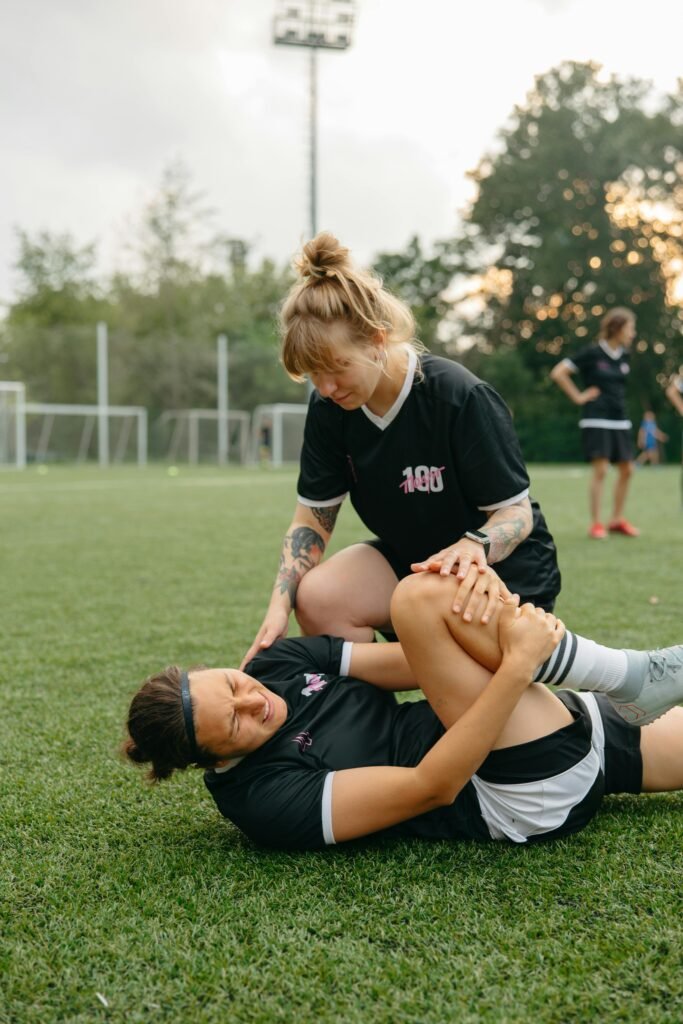
You did the physical therapy. You hit every milestone. Your doctor cleared you. But when you step back onto the field, something feels off.
- Your movements are hesitant where they used to be automatic
- You are second-guessing decisions you once made without thinking
- You are protecting a part of your body that has already healed
- You are performing at 85% because 15% of you is still waiting for something to go wrong
This is not weakness. This is the mental side of injury, and it is just as real as the physical side. Most athletes are never given the tools to address it. They push through and hope it resolves. Sometimes it does. Often it does not, and it quietly costs them months of performance they never get back.
What is actually holding your recovery back
Most athletes dealing with a difficult recovery are not struggling because the injury was too severe. They are struggling because of the mental patterns the injury created. The most common ones we see:
- Fear of re-injury that changes how you move, compete, and commit in high-stakes moments
- Loss of athletic identity after being sidelined long enough to feel disconnected from your sport
- Guarded mechanics and hesitation that replace the instinctive, confident movement you had before
- Pressure to return quickly and perform immediately, which adds stress to an already demanding process
- Catastrophic thinking that keeps the brain on high alert even when the physical threat is gone
At RE Sports Psychology, we start by identifying exactly which of these patterns is affecting your recovery. Every athlete is different. Your sessions are built around your specific situation, not a standard plan built for the average case.
How we work with you
Our group practice draws on Guided Imagery, Progressive Muscle Relaxation, and Cognitive Hypnotherapy to address the mental side of recovery in a way that is direct, efficient, and built for athletes who want results, not extended treatment.
Guided Imagery keeps you mentally connected to your sport throughout physical rehabilitation. When you cannot yet practice physically, you can practice mentally. The benefits are direct:
- Maintains the neural pathways and competitive mindset that physical inactivity erodes
- Builds confidence in your performance before you are back on the field
- Reduces the anxiety associated with return-to-play scenarios through repeated mental rehearsal
Progressive Muscle Relaxation gives you direct control over the tension patterns that fear and anxiety create in your body. Athletes who are afraid of re-injury often carry that fear physically without realising it.
- Tight, restricted movement that limits performance even when the body has healed
- Guarded mechanics that protect an injury site long after it is no longer necessary
- Physical tension that builds under competitive pressure and undermines execution
Progressive Muscle Relaxation teaches you to identify that tension and release it deliberately, both in sessions and in competition.
Cognitive Hypnotherapy targets the subconscious patterns that drive fear, hesitation, and self-doubt. The surface-level concern about re-injury is not the whole story. Beneath it are deeper patterns that Cognitive Hypnotherapy is designed to correct at the source, not manage indefinitely, so they stop interfering with your performance for good.
Cleared is not the same as ready
Physical clearance means the injury has healed. It does not mean you are mentally prepared to compete at full intensity. Athletes who return without addressing the mental side often find themselves:
- Pulling out of contact or high-intensity situations they would previously have committed to without hesitation
- Favouring the uninjured side in ways that create compensatory movement patterns
- Underperforming in the critical moments they have been working toward for months
- Struggling to reconnect with the competitive identity and instincts that defined them before the injury
Our group practice bridges the gap between physical clearance and genuine competitive readiness. By the time you return to competition after working with us, you are not hoping the fear does not show up. You have already worked through it.
Fast results, not long-term dependency
Our approach is not designed to keep you in sessions indefinitely. It is designed to get you results in as few sessions as possible and then let you go perform. Here is what the process looks like: A free 15-minute consultation to understand your situation and assess fit A comprehensive consultation to map the emotional and psychological patterns affecting your recovery Fully customized sessions built around your specific goals and timeline Regular progress reviews with sessions adjusted based on results A natural tapering of sessions as confidence stabilises and independence builds The tools and strategies you develop stay with you long after the sessions end. That is by design. Our goal is for you to not need us, and to reach that point as quickly as possible without cutting corners.
Who we work with
Our group practice works with athletes across all sports and competitive levels who are navigating injury recovery and want to make sure the mental side does not become the thing that holds them back. You are likely the right fit if:
- You have been physically cleared but do not feel mentally ready to compete at full intensity
- Fear of re-injury is changing how you move or how much you commit during competition
- Your confidence has not returned at the same pace as your physical recovery
- You want a structured, results-focused approach rather than open-ended support
We offer both in-person sessions and online sessions so that location and scheduling demands do not stand between you and the support you need.
Your body has already done its part. Now it is time to train the rest of you. Reach out today to schedule your free 15-minute consultation. No pressure, no paperwork, no vague plans. Just a direct conversation about where you are, what is getting in the way, and what a focused, customised recovery plan looks like for you. Pricing and scheduling details are available when you connect with our team.
Frequently asked questions
The most effective step is to treat the mental side of recovery with the same structure and intention you give the physical side. That means working with specialists who understand the psychological patterns injuries create, not just pushing through and hoping confidence returns on its own. At RE Sports Psychology, our group practice uses Guided Imagery, Progressive Muscle Relaxation, and Cognitive Hypnotherapy to help athletes rebuild mental clarity, manage fear of re-injury, and return to competition with composure. The key is starting the mental work early in the recovery process, not as an afterthought once you are cleared to play.
The right mindset is not forced positivity or pushing through the fear. It is clarity. Athletes who recover well mentally are able to separate the physical healing process from their sense of competitive identity, stay connected to their sport mentally during time away, and approach return-to-play with genuine confidence rather than performance anxiety. That kind of mindset does not happen automatically. It is built through specific, deliberate mental training. Our group practice designs each athlete's sessions around the exact psychological patterns that are shaping their recovery, because what works for one athlete will not work for every athlete.
The mental impact of injury is wider than most athletes expect. Common effects include:
- Fear of re-injury that alters movement patterns and decision-making under pressure
- Loss of athletic identity, particularly during extended recovery periods
- Frustration, helplessness, and difficulty tolerating the pace of rehabilitation
- Increased performance anxiety on return to competition
- Difficulty trusting the body again even after full physical clearance
These are not signs that something is wrong with the athlete. They are predictable responses to a significant disruption. The difference is whether they are addressed directly or left to resolve on their own.
Significantly. Athletes who carry high levels of anxiety, fear, or emotional distress during rehabilitation recover more slowly, are more susceptible to compensatory injuries caused by guarded movement, and are more likely to underperform when they return to competition. The mind and body are not separate systems. How an athlete is thinking and feeling directly influences how they move, how hard they push, and how quickly they rebuild physical trust in their body. Addressing the mental side of recovery is not optional if the goal is a full and fast return to performance.
Three things make the biggest difference. First, staying mentally engaged with your sport during physical rehabilitation through structured Guided Imagery keeps competitive sharpness intact when physical practice is not yet possible. Second, learning to identify and release the physical tension that anxiety and fear create, which is where Progressive Muscle Relaxation is most useful. Third, addressing the subconscious beliefs about your body, your safety, and your capability that formed at the moment of injury. Those beliefs drive behaviour long after the physical damage has healed, and Cognitive Hypnotherapy is specifically designed to correct them at the source. Our group practice combines all three approaches in a fully customised plan built around each athlete's situation.
Mental recovery means reaching a state where the fear, hesitation, and self-doubt created by the injury no longer interfere with how you compete. It is not about feeling positive or staying motivated. It is about being able to move freely, commit fully, and perform under pressure without part of your attention still monitoring for something to go wrong. Physical clearance and mental recovery do not always arrive at the same time. Our group practice focuses specifically on closing that gap so athletes return to competition as complete performers, not just physically repaired ones.
The strategies that produce the most direct results for athletes are:
- Guided Imagery to maintain neural performance pathways and rehearse confident return-to-play scenarios
- Progressive Muscle Relaxation to reduce tension and restore physical trust in the body
- Cognitive Hypnotherapy to identify and correct the subconscious fear and doubt patterns formed during injury
- Regular progress reviews to ensure the approach is producing results and to adjust based on what is and is not working
At RE Sports Psychology, these strategies are always applied in a fully customised way. The combination and emphasis depend entirely on what each individual athlete needs most.
In sports psychology, injury recovery refers to the structured process of addressing the psychological and emotional dimensions of rehabilitation alongside the physical ones. It recognises that being sidelined does not only affect the body. It affects confidence, competitive identity, emotional regulation, and the ability to perform under pressure when you return. Our group practice approaches injury recovery as a full-spectrum process. The physical rehabilitation is handled by the medical team. We handle the mental side, with focused, customised sessions designed to produce a genuine return to competitive readiness in as few sessions as possible.
The three elements that matter most are recognition, restructuring, and readiness. Recognition means identifying the specific mental patterns the injury created, whether that is fear of re-injury, loss of confidence, guarded movement, or something else entirely. Restructuring means actively correcting those patterns rather than waiting for them to fade on their own. Readiness means reaching a state of genuine mental preparedness to return to competition, not just physical clearance. At RE Sports Psychology, our sessions are designed to move athletes through all three elements efficiently, with a clear focus on results rather than open-ended treatment.
Most athletes move through a predictable sequence of psychological stages after injury. These typically include an initial shock or denial response, followed by a period of frustration and identity disruption as the reality of the recovery timeline sets in, then a gradual process of re-engagement with the sport mentally and emotionally, and finally a return-to-play phase where confidence and trust in the body are either rebuilt or remain a barrier. Not every athlete experiences these stages in the same order or with the same intensity. Our group practice meets athletes wherever they are in that process and builds a plan that addresses what is actually happening for them right now, not what a generic recovery model says should be happening.
Your Performance Is Waiting
You’ve already done the physical work. Now it’s time to train your mind. Take the first step toward clearer focus, stronger confidence, and consistent performance when it matters most.
Our group practice at RE Sports Psychology exists for one reason: to help athletes perform better, faster, and more consistently by training the part of performance most coaches overlook. We integrate sports psychology, performance coaching, and cognitive hypnotherapy into a cohesive, customized approach that targets the emotional and subconscious patterns behind anxiety, confidence loss, overthinking, and inconsistency under pressure. We begin every client relationship with a thorough consultation designed to understand your goals, your sport, and what is specifically driving your performance challenges, then build a clear, purposeful plan from there. Available in-person and online, our sessions are structured around meaningful progress and self-reliance, not indefinite treatment.